



SusTelling E-Learning | Module 3: How can SusTelling be used?
How do you write a SusTelling story yourself? Module 3 guides you step by step from reflecting on your own stance through audience, effects and structure to the finished story, using Anna’s text as an example.

SusTelling E-Learning · Storytelling for Sustainability
- Module
- 3 of 3
- Sections
- 8
- Exercises
- 2
- Audio
- 20
- Licence
- CC BY-NC-SA 4.0
The “clever” case study: Writing the story
THE „CLEVER“ CASE STUDY: WRITING STORIES
The unpackaged food store is about to open. Anna now feels well prepared for her task. She understands what makes SusTelling successful and what effects her contribution can have for her target audience. In planning her message, Anna first considers what exactly she wants to tell about the opening day and who she wants to reach. She also decides which characteristics of SusTelling she wants to include in her story and which effects she wants to achieve. With the help of step-by-step guidelines, she approaches the task of writing her own SusTelling story.
WHAT THE PROFESSIONALS SAY
Listen to the interview excerpts from Torsten Schäfer and Heike Janßen. Both are professionally involved in storytelling. The answers to the questions can support you in the creative process.
What do you think are the most important ingredients for a good story?
What is an example of particularly successful storytelling?
Which methods help you to develop your stories?

Torsten Schäfer is a journalist, writer, and professor of journalism and text production at Darmstadt University of Applied Sciences. His work focuses on style and language, storytelling, environmental and European journalism, and media sustainability.
WebsiteListen to the answers · AI voice
Heike Janßen is a journalist, writer, and trainer. Her work focuses on politics, sustainability, climate change, development aid, media and Africa.
WebsiteListen to the answers · AI voice
ANNA BEGINS …
Now Anna wants to begin. She will follow the step-by-step guidelines in the next sections until she finishes writing her story.
The steps are:
- AReflect on your own stance
- BIdentify your target audience
- CDetermine your story’s effects
- DDevelop a preliminary structure
- EShape the story
Learn more
Book recommendations:
Gottschall, Jonathan (2013): The Storytelling Animal: How Stories Make Us Human, 1. Edition, Mariner Books.
Leinaweaver, Jeff (2015): Storytelling for Sustainability: Deepening the Case for Change (Doshorts), Routledge.
A. Reflecting on your own stance
Guiding questions
- What is my goal when I use SusTelling?
- What is my understanding of sustainable development?
- What other effects could my story have on my audience? Which effects do I want to prevent?
Annas FIRST REFLECTIONS ON HER STANCE
Anna believes that it takes a certain stance to use storytelling for sustainability. People shouldn’t be treated as if they were dumb and the story shouldn’t be too one-sided. Anna is aware of the risks associated with sustainability, such as manipulation or simplification. So, Anna wants to think carefully about what effects her story should and could have for others, and what effects they shouldn’t have.
B. Defining the target audience
B. DEFINE THE TARGET AUDIENCE
Guiding questions
- Who is my target audience? Is it people who have already dealt with sustainability issues and are positive and open-minded about them? Or are they people who don’t relate to the idea of sustainability and need to be approached in a different way? How old are the people I want to address?
- What is important to my target audience? What values, stances and interests do they have?
- What does my narrative have to do with the lives of my target audience?
Anna’S THOUGHTS ABOUT HER TARGET AUDIENCE
Anna wants her story to be about her local customers as much as possible, which means it’s important to her that the city of Lindau, the market and neighborhood can be recognized in the story. She assumes that not all customers are familiar with sustainability issues.
She thinks of various acquaintances, such as her hairdresser Thomas, who so far has shown little interest in this topic close to her heart. To the extent that it’s possible, she is trying to put herself in the shoes of her target audience and better understand what benefits they might derive from her story.
C. Determining the story’s effects
C. DETERMINE THE STORY’S EFFECTS
Guiding questions
- What effects do I want to achieve? What do I want to achieve for the target audience?
- Which effects might my narrative have that I want to avoid?
- Which SusTelling characteristics do I want to use to achieve these effects?
Anna’s Strategy
Anna already has an idea of how the story she wants to write should work. She meets with her business partners and friends Daniel and Sonja and tells them her ideas. She’s interested to see what they think. Anna pays close attention to how Daniel and Sonja react to the various elements and parts of the story. When do they seem curious and interested, at what points do their thoughts seem to wander, where do they express skepticism?
With this initial feedback and her ideas continuing to take shape in her head, Anna now retreats to her desk and considers how she wants to structure her story.
D. Developing an initial structure
D. DEVELOP YOUR INITIAL STRUCTURE
Guiding questions
- Who are the characters in the story? Who do I put at the center of the story?
- How should the plot unfold?
- What conflicts, developments and resolutions should build the inner arc of tension and make for an exciting story?
Anna’s STORY TAKES SHAPE
TASK
Inner characteristics
E. Shaping the story
Guiding questions
- How should the story begin, what should happen in the middle, and how does the story end? Do I work with “time jumps” such as flashbacks?
- What stylistic devices support my plot?
- What contextual information is important? What is unimportant?
Anna’s STORY: THE CORE
Anna considers how the story should develop. She has read that connecting patterns in stories to our experiences are particularly good at sparking a person’s imagination. She is most familiar with the hero’s journey – a heroic character sets out to face a challenge, problem or adversary. Anna also understands that these storytelling patterns are often linked to very basic emotions such as love, hate, fear or courage. Another important note for her is that the greater and the more numerous the challenges, the more interesting the narrative plot can be. In her case, however, a simple variant will probably do for the time being. At least that’s what she thinks now!
task
Learn more
Kent, M. L. (2015). The power of storytelling in public relations: Introducing the 20 master plots. Public Relations Review, 41(4), 480–489.
Finishing the story
Anna has now started to write her story. Maybe you’d like to try SusTelling yourself. No matter if you want to start your own story or if you want to try Anna’s press release first. Feel free to check out our step-by-step guidelines in the handout or the finished story Anna has published on her website. You can read that next.

ANNA’S STORY
Unpackaged in the supermarket
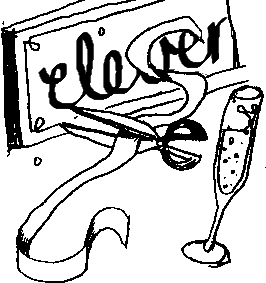
Lindau. The white chalk scratches across the blackboard. It’s the final sweeping tail of the “e” that Anna uses to write the last letter of “Welcome” on the board. The sound gives her goose bumps. And at the same time, it’s excitement that makes her heart pound and brings a blush to her face. Because today is the day Anna, together with her friends Sonja and Daniel, has been working towards for months. The supermarket branch on the high street in Lindau is celebrating its reopening.
Anna, Sonja and Daniel are 18, 19 and 21 years old. They’ve known each other for a while – and are committed to everything to do with sustainability. This inspired the three friends to get involved in the “Lindau for Change” initiative. They want to take away people’s fear of dealing with the supposedly complex issue of sustainability. And they want to develop concrete actions, such as the sustainable shopping concept “clever: naturally unpackaged”, which the three have been working on for months. Today is the premiere
Everything is neatly displayed, and looks reduced to the minimum
While Anna greets the mayor and numerous families outside, Sonja and Daniel ride into the courtyard on their bicycles. Before the store fills up, the two have quickly picked up the undyed cloth bags the store is giving away to customers to carry their purchases home.
Andrea Miller owns the supermarket. When she heard about the “clever” concept at a panel discussion a few weeks ago, she could already see the new design for her organic section. There would be an unpackaged corner. With simple dispensers full of dry goods - raisins, nuts, quinoa, amaranth, rice and pasta. Plus fine and coarse-ground spices. Everything organized, reduced to the essentials, the product. Without any packaging or foil wrapping. Next to them fresh vegetables and green herbs, whose colors brighten up the new shopping corner.
That’s exactly how it looks today. Maybe even a little better, Andrea thinks. She beams with satisfaction and looks at the new display in the unpackaged corner, 70 percent of the products come from Europe. Some of it is even grown in the Lüneburg region, within a radius of 25 kilometers
clever = unpackaged
“What does ‘clever’ mean?” asks a little boy in blue jeans and a sun hat as Sonja walks past him. Together with his mother, he is standing in front of the large oatmeal dispenser. “Someone who understands things quickly and is good at doing things is clever,” Sonja explains to the boy. “In this supermarket section, we do without plastic. That’s “clever” because we can protect the environment that way.” The boy nods, but then turns his big blue eyes away from Sonja and toward the oatmeal. “1, 2, 3,” his mother counts quietly and pushes down a lever to open the dispenser. Oat flakes come pouring out of the cylinder and into the transparent cereal box with a sliding lid the boy is clutching with both hands.
It’s already lunchtime and more and more people are coming to the new unpackaged section. Many of the customers, young and old, have brought shopping baskets or bags. They’ve brought their containers from home to do exactly what Anna, Sonja and Daniel want to achieve with their concept: shop sustainably. Because that’s clever.
End of the learning unit
Well done!
You have reached the end of the SusTelling online learning unit. Have fun writing your own stories!
SusTelling E-Learning, SusTelling project team (2020). Licence: CC BY-NC-SA 4.0, unless stated otherwise. Funded by the German Federal Environmental Foundation (DBU).
The audio recordings were re-recorded in 2026 with AI voices (OpenAI), based on the original scripts.