Interdisciplinary first-year formation as institutional default: the Transformation module in the Leuphana Semester
In the Leuphana Semester, the Transformation module reaches all first-year Bachelor students and anchors inter- and transdisciplinary work in the institution's culture.
The practice
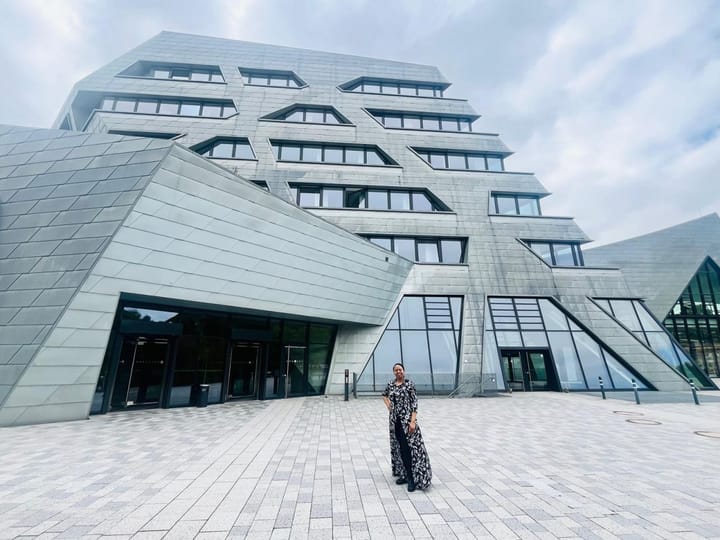
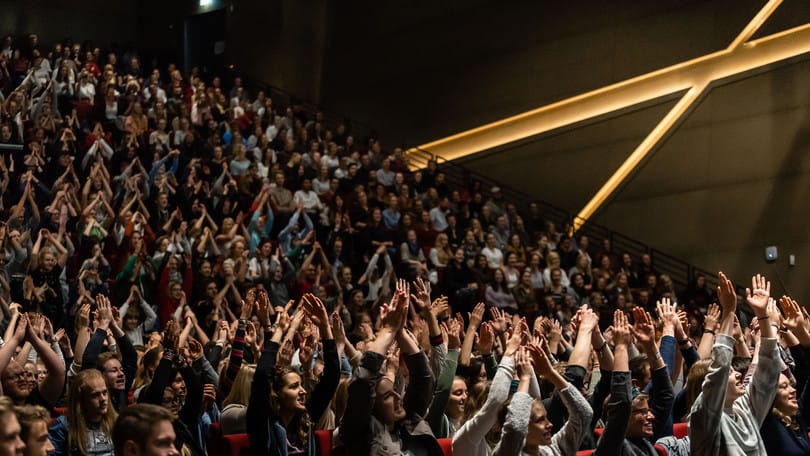
At Leuphana University Lüneburg, all Bachelor students begin their studies with a shared first semester, the Leuphana Semester. Within it, the reformed module ‘Transformation’ combines critical reflection on societal change with action-oriented, inquiry-based project work, reaching around 1,400 students per year across all study programs (Picht-Wiggering et al., 2025; Michelsen, 2023). The module is not an isolated teaching innovation but functions as a whole-institution support system: a dedicated professional development program prepares the interdisciplinary teaching team; major programs build on its outcomes; the experience of cross-disciplinary work is carried forward in the complementary studies track (“Komplementärstudium”) across all semesters; and newly appointed professors are encouraged to teach in the module. Inter- and transdisciplinary work thus becomes part of the institution’s culture rather than the commitment of individual champions.
The landscape pressures it speaks to
The module responds to the epistemological crisis around scientific knowledge ( ⇓ ) by making critical thinking and the reflexive appraisal of validity claims a formative experience for every student, and to skepticism about the relevance of higher education ( ⇓ ) by connecting first-year study to societal transformation challenges; the shared first semester also integrates an increasingly diverse student intake ( ⇓ ). The crack in the regime practice ( ◊ ) it exposes is the default of purely disciplinary socialization from day one, in which cross-cutting formation and sustainability-oriented teaching depend on individual initiative rather than being built into the core architecture of the curriculum.
Pathways for scaling
- Anchoring ( ⇑ ): The module is a mandatory element of the Leuphana study model for all first-year students, carried by a cross-faculty teaching team and a standing professional development structure.
- Coalition-building ( ⇑ ): Encouraging newly appointed professors to teach in the module builds a growing coalition of regime insiders who carry the interdisciplinary culture into their faculties.
- Aggregation ( ⇑ ): The experiences of cross-disciplinary work are systematically carried forward into the complementary studies (a track of complimentary courses that all students, irrespective of their major and minor, need to select courses from) and feed back into the design of major programs, turning a single module into an institution-wide learning infrastructure.
References:
Michelsen, G. (2023), “Learnings from the Road to a Sustainable University – The Case of Leuphana University”, Earth Charter Magazine, Vol. 2, pp. 5–16.
Picht-Wiggering, L., Bürgener, L., Fischer, D. and Nigro, R. (2025), “Wandel kritisch-konstruktiv gestalten lernen: Das neue Modul „Transformation“ im Leuphana Semester”, in Humburg, D., Dernbach, B. and Klages, M. (Eds.), Interdisziplinäre Bildung für nachhaltige Entwicklung (I-BNE): Beiträge zur zweiten Fachkonferenz 2024 an der Technischen Hochschule Nürnberg Georg Simon Ohm, Nürnberg, pp. 5–14.