Tea bags and apple peel as climate sinners? Inquiry-based learning at home
Can a tea bag harm the climate? A TU Berlin report on how FoodLabHome raises young people's awareness of household food waste.
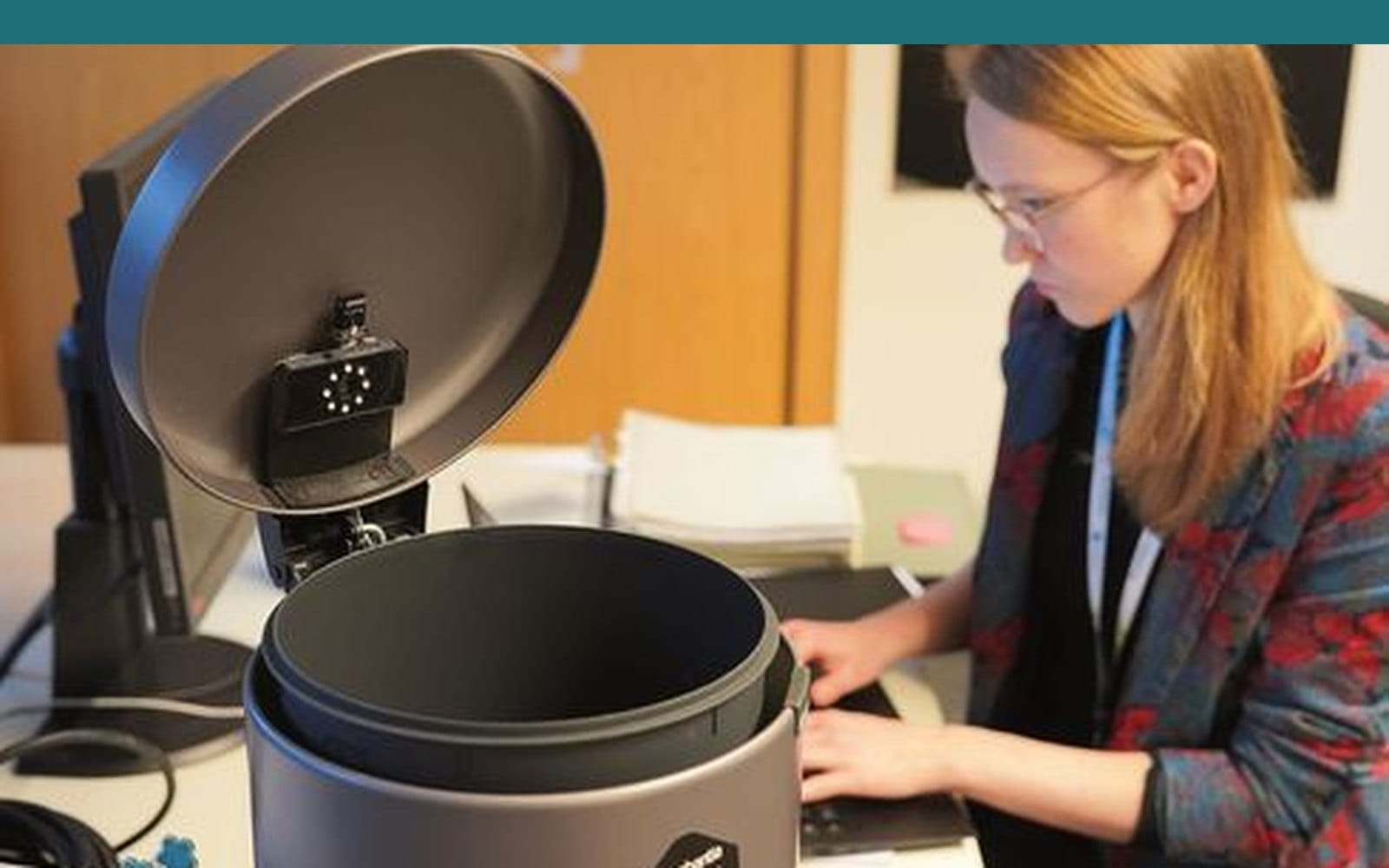
Can a tea bag harm the climate? FoodLabHome uses inquiry-based learning to make young people aware of how household food waste affects the climate. A report from TU Berlin's staff magazine (in German).
It is small and inconspicuous, but the smart bin of the FoodLabHome joint project has a lot to offer. Whether tea bag or apple core, it photographs and weighs every piece of food thrown into it and collects the data for calculating the CO₂ emissions. “Many people are not aware of how high the greenhouse gas emissions caused by household food waste are. Food production, the transport of the waste and the spoiling itself all release CO₂,” explains Florence Ziesemer, doctoral researcher in the citizen science project and research associate in Prof. Dr. Ulf Schrader's department of Work Studies/Economics and Sustainable Consumption at TU Berlin.
We follow an innovative and participatory educational approach. We first inform classes from general and vocational schools about food waste, but then let them investigate and analyse the climate relevance of food waste in their own households and develop effective intervention strategies.
Funded by the German Federal Environment Ministry's National Climate Initiative, the pilot project had invited 250 students to its three-day workshops with several weeks of experiments at home since its start in October 2018. Ulf Schrader's department and Prof. Dr. Nina Langen's department of Education for Sustainable Nutrition and Food Science worked closely with Leuphana University Lüneburg. On average, the students found, 1.2 kilograms of food per household ended up in the bin each week. The reasons: fruit no longer fresh enough, yoghurt past its date, portions too large.
The data collected through measurement sheets and questionnaires from students in grades 9 to 11 could have been more extensive, but the awareness-raising effect of inquiry-based learning was enormous. Whole families suddenly engaged with sustainable nutrition and climate protection.
By the end of the project in September 2021, the researchers planned to use their findings to develop online modules for teachers and a food waste calculator, and to establish the approach through trainings for educators.
Available now
The announced results are online: the Food Waste Tracker, plus the online module and the teaching materials with handbook (both in German).
Source: TU intern 1/2020, Romina Becker (archived version, in German).
This post was first published in German on the project website foodlabhome.net. German version: on bne-sachunterricht.de.