Vibrant but Fragmented: Mapping Teacher Education for Sustainability in Germany

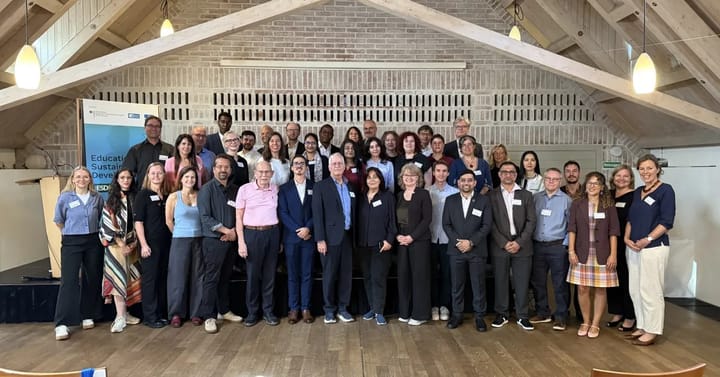
In a new publication led by Christina Ehras and Mandy Singer-Brodowski (University of Regensburg), together with a 22-person team of subject-didactics researchers from across Germany, we ask how the research field around teacher education for Education for Sustainable Development (ESD) has developed — and how cohesive it actually is as a discipline.
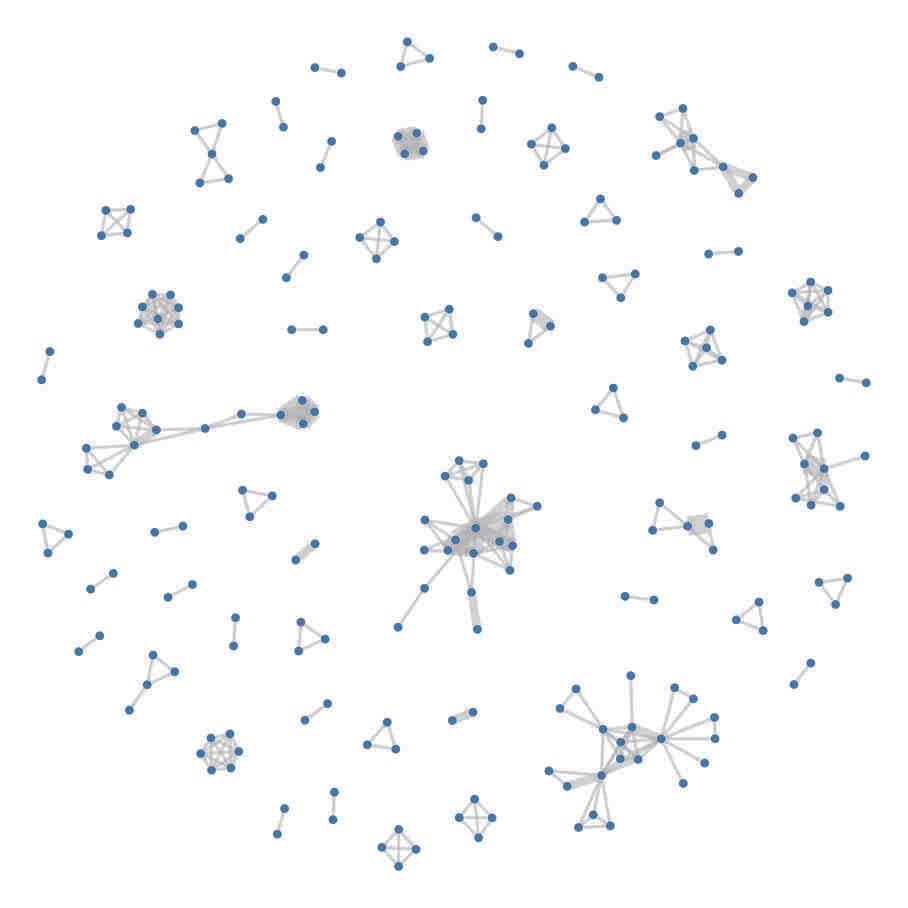
Drawing on 154 scientific publications (books, book chapters and journal articles) the scoping review traces the discourse on teacher education for sustainable development (TESD) in Germany since 1998. Six analytical key questions structure the analysis: which subject didactics engage with the topic, when, how interdisciplinary the work is, who carries the discourse, and which target groups and methods dominate. The picture that emerges is one of clear momentum since around 2016, but also of fragmentation: biology, geography and general studies for primary school form the strongest subject anchors, while music, philosophy and economics are entirely absent. Interdisciplinary collaboration is limited, and the discourse is carried by a comparatively small number of authors whose co-authorship networks remain mostly disconnected.
The review reads as both an inventory and a call for closer interdisciplinary work. Empirical studies dominate while theoretical contributions remain rare; the second phase of teacher training (induction) is under-researched compared with the university-based first phase; and longitudinal and impact studies are still scarce. The authors close with a plea for projects that genuinely cross subject didactics — not because interdisciplinarity is a virtue in itself, but because qualifying teachers for ESD touches questions (curriculum design, competence models, learning theory) that no single subject can answer on its own. As the education of educators is identified as a precondition for SDG 4.7, the review positions TESD as a research field whose pivotal importance is likely to grow.
Paper Abstract:
Education for Sustainable Development (ESD) is considered an internationally endorsed educational concept for dealing with global challenges and qualification of teachers is essential for the implementation. This scoping review explores the structures and dynamics of the scientific field of teacher education for sustainable development (TESD) in Germany using six indicators or key questions as an analytical heuristic. An analysis of 154 publications shows that since 2016 the field has grown and become more differentiated but remains fragmented. Stronger integration exists in the subject didactics of biology, geography, and general studies for primary school. Interdisciplinary collaboration is limited, and the discourse is shaped by a few key researchers. TESD research primarily focuses on primary school and upper secondary school as well as student teachers at university. Empirical studies dominate, whereas theoretical work is rare. Overall, the review reveals significant research gaps and underlines the need for more interdisciplinary approaches in TESD.
Bibliographic reference:
Ehras, C., Singer-Brodowski, M., Costa, J., Hemmer, I., Brenne, A., Brok, U., Denzin, A., Dick, M., Fischer, D., Kenner, S., Kminek, H., Kreid, S., Krengel, F., Lindau, A.-K., Lohmann, J., Menthe, J., Meyer, M., Roczen, N., Schaal, S., Surkamp, C., Tacke, L., & Weselek, J. (2026). Professionalisation of Teachers for Education for Sustainable Development in Germany: A Scoping Review. RISTAL, 9, 1–64. https://doi.org/10.2478/ristal-2026-0001