Whole institution approaches at HES 2026: what helps universities transform?
At the Higher Education Summit 2026 in Bordeaux, the TTL-WIA team presented first findings from a scoping review on whole institution approaches to sustainability.
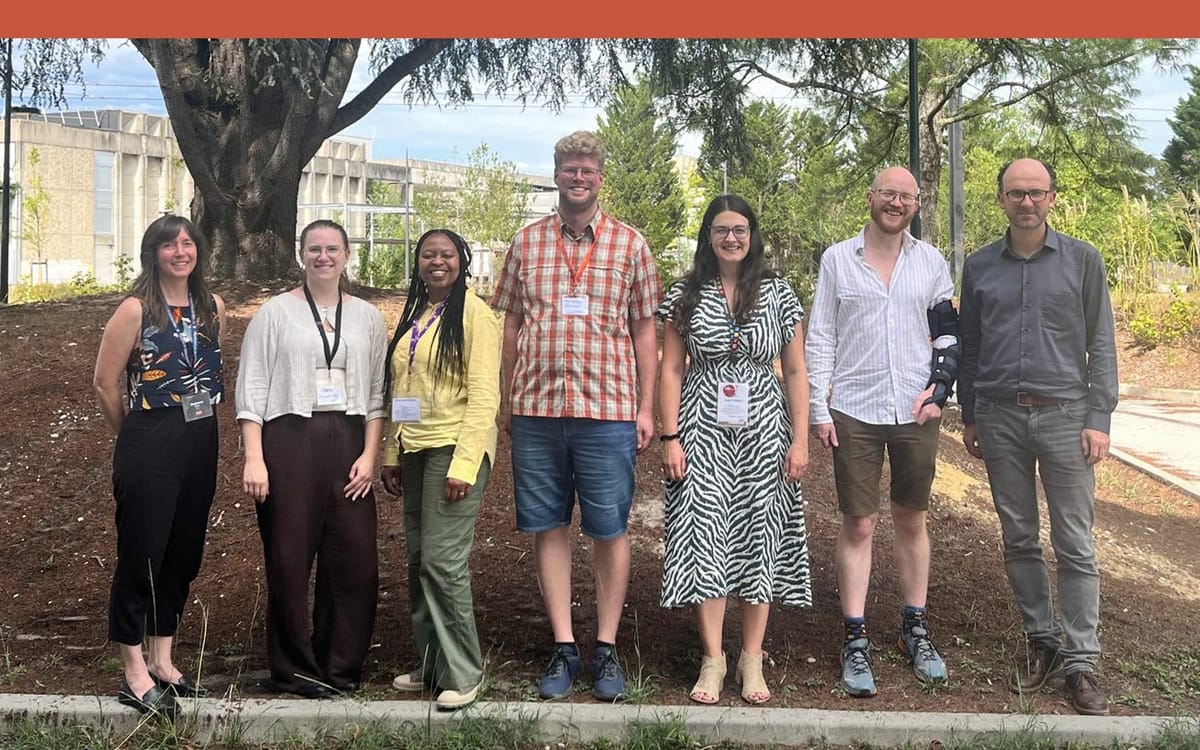
What does it take for universities to move beyond isolated sustainability initiatives? At the Higher Education Summit 2026 in Bordeaux, Sara Sawatsky (McGill University), Stephanie Leite (McGill University and University of Lethbridge) and Matthias Kramer (Leuphana University Lüneburg) presented first findings from the scoping review in our TTL-WIA project.
The summit, organised by the COPERNICUS Alliance together with the UNESCO Chair at Université Bordeaux Montaigne and further partners, ran under the theme “Transformative Learning for Sustainable Futures”. Our contribution, “Transforming Teaching and Learning in Higher Education: Whole of Institution Approaches Towards Sustainability”, took up this theme from an institutional angle. It asked what the existing literature tells us about whole institution approaches (WIAs) and their potential to transform teaching and learning, and what enables or constrains such change. In the same session, Isabel Toman presented evidence on whole institution approaches from the UNESCO-coordinated Transforming Futures project, which allowed a close conversation between the two papers.
What the scoping review looked at
The team searched academic and grey literature in English, French and German published between 2015 and 2025. The cases were mapped against the Whole School Approach flower model by Wals and Mathie (2022).
The approaches came from North America, Europe, Asia, Oceania and South America. All of them address curriculum as well as pedagogy and learning, while vision, ethos, leadership and coordination receive less attention.
Key insights
- Multiple avenuesTeaching and learning for sustainability takes many forms, from project-based and place-based to community-engaged, experiential and inter- or transdisciplinary formats. Transforming teaching and learning requires transforming pedagogy.
- Transformative, but often partialThe sources report transformative practices and outcomes, such as increased sustainability competencies, improved relationships and students acting as change agents. Yet transformation was often partial or localised rather than the deep systemic change that WIA theory imagines.
- Systemic constraintsStaff turnover, siloed governance and limited funding limit what WIAs can achieve. Initiatives thrive on stable leadership, long-term institutional commitment and dedicated coordination roles.
WIAs to transforming teaching and learning succeed when they are structurally supported, not just ideologically endorsed.
Authors of the presentation: Sara Sawatsky, Blane Harvey, Matthias Kramer, Daniel Fischer, Stephanie Leite and Claire Grauer (McGill University, Leuphana University Lüneburg, University of Lethbridge).